no steve jobs in biotech
Everyone knows who founded Apple, Amazon, Tesla, Microsoft. Ask someone outside biotech to name five biotech founders and they'll struggle. The industry's produced some of the most extraordinary founder-led companies in business history -- so why doesn't anyone know them?
Here's a partial list, in rough chronological order, of the people who built the drug industry as we know it.
Bob Swanson, Genentech (1976-1990). 28-year-old VC with a chemistry degree but no research background who read a paper on recombinant DNA and drove to UCSF to pitch Herb Boyer. They founded Genentech that afternoon over beers. 14 years as CEO, and in doing so he essentially created the biotech industry.
George Rathmann, Amgen (1980-1988). Joined a tiny startup with no product and turned it into one of the largest and most commercially successful biotech companies in the world; much of the playbook for turning recombinant DNA into a real drug business was written under him.
Henri Termeer, Genzyme (1983-2011). 28 years as CEO, building a rare disease franchise when pharma thought rare disease was too small to matter -- Gaucher, Fabry, and a long list of conditions the industry had written off.
Leonard Schleifer, Regeneron (1988-present). Founded Regeneron in 1988 and brought on George Yancopoulos the following year as scientific co-founder; the two of them are still running it 37 years later. Eylea and Dupixent are among the most commercially successful drugs ever made, and Schleifer and Yancopoulos have outlasted almost every executive team in the S&P 500.
Joshua Boger, Vertex (1989-2009). Left Merck to build a company around structure-based drug design; Vertex now owns cystic fibrosis.
Leonard Bell, Alexion (1992-2017). Built a company around one ultra-rare disease (PNH) and one drug (Soliris); when he stepped down, Alexion had become the archetype for ultra-rare disease economics.
John Maraganore, Alnylam (2002-2021). Ran Alnylam for nearly 20 years, including a long stretch when pharma had written off RNAi and most observers assumed the company was finished. The science was Nobel-worthy and still almost killed the company before it worked.
The operators are only half the story. Bob Nelsen at ARCH quietly helped start Illumina, Juno, Agios, Alnylam, Beam, and Resilience, among many others, and has probably backed more foundational biotech companies than any other investor alive. Noubar Afeyan runs Flagship Pioneering as founder, investor, and CEO all at once, which is how a single firm ends up spawning Moderna. And then there are the academic founders whose labs have incubated an outsized number of companies: Bob Langer at MIT and George Church at Harvard have each co-founded dozens, with the Church lab spinning out 16 in 2018 alone, and Jennifer Doudna's CRISPR work at Berkeley seeded Caribou, Mammoth, Intellia, and Scribe.
Schleifer has run Regeneron almost twice as long as Jobs ran Apple, Termeer built a company that saved thousands of lives from diseases pharma wouldn't touch, and Swanson literally invented the industry. In any other sector these would be household names, taught in business schools and interviewed on every podcast.
So why aren't they?
The product is a molecule, not a brand. Patients know Humira; almost nobody knows AbbVie. Drugs are prescribed by doctors, not chosen by consumers, so the entire incentive structure points away from founder-as-brand (I wrote about this beautiful incentives machine in detail here). The timelines don't help either: a drug takes 10-15 years from target to approval, and a company can spend a decade failing quietly before anyone outside the industry has reason to care, whereas tech products can go from launch to cultural phenomenon in 18 months.
And the scientific founder often isn't the CEO. In tech, the person with the idea usually runs the company, but in biotech the insight comes from academia and the operator is someone else entirely, so credit splits and neither half gets the full founder mythology.
Failure is private and common. Most biotech companies fail, most drugs don't work, and you can't build personality cults around people with a 10% base rate. Regulators, not customers, are the audience, which makes it hard to be a folk hero when your most important stakeholder is CMS.
The biggest reason, though, is that biotech founders usually don't get to finish the story because pharma acquires them. Genzyme to Sanofi, Alexion to AstraZeneca, Juno to Celgene, Kite to Gilead, Medivation to Pfizer. The drug goes on to make billions, but the brand disappears inside a pharma logo and the founder's tenure ends at closing, so the long arc that would've turned someone into a folk hero gets cut off early.
Not entirely, though. Stephane Bancel became briefly famous as Moderna's CEO during the COVID vaccine rollout, though the attention faded as the pandemic did. And the one biotech founder who did become a true household name was Elizabeth Holmes, whose Theranos got documentaries, a bestselling book, and a movie -- not because it was the most important biotech story of the decade, but because it was the most consumer-legible. Young founder, simple product, dramatic fall. The stories that actually mattered, the ones where someone spent 20 years bringing real drugs to real patients, aren't as easy to package into a three-act arc.
The real stories, though, have started to get written. Sally Smith Hughes' Genentech: The Beginnings of Biotech captures Swanson and Boyer better than anything else out there, Barry Werth's The Billion Dollar Molecule on Vertex is still one of the best books ever written about what building a drug company actually feels like, and Walter Isaacson's The Code Breaker does for Doudna what his Jobs biography did for tech. Even Acquired, which has canonized founder stories from Nvidia to LVMH, has only done one biotech episode -- Novo Nordisk and Ozempic (very much worth the three and a half hours). These are all great, but some tech founders have a whole shelf. Thankfully, that gap may not last forever.
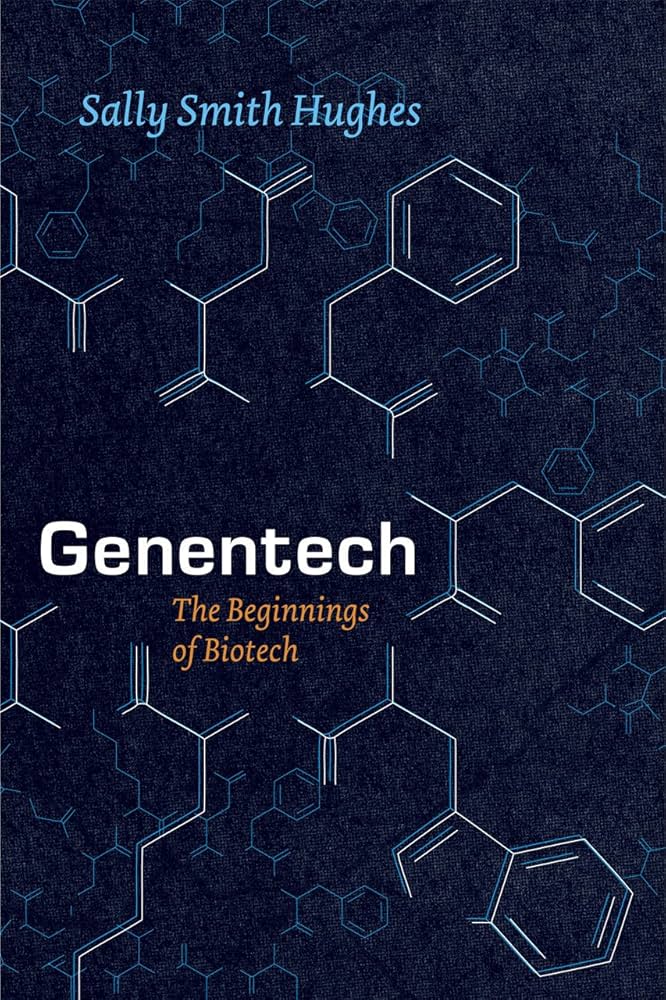 Hughes (2011)
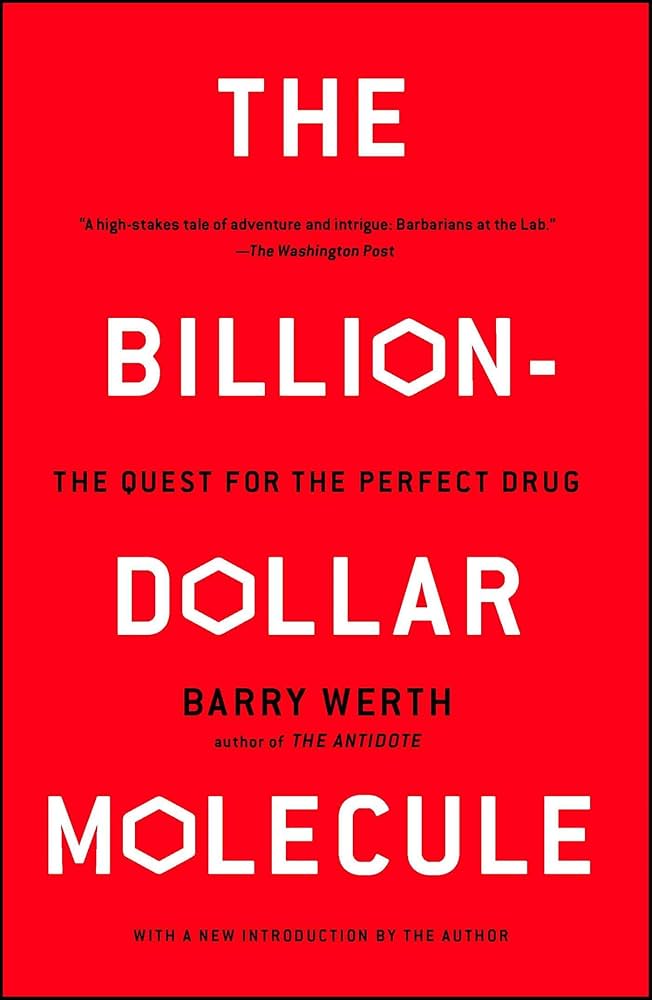 Werth (1994)
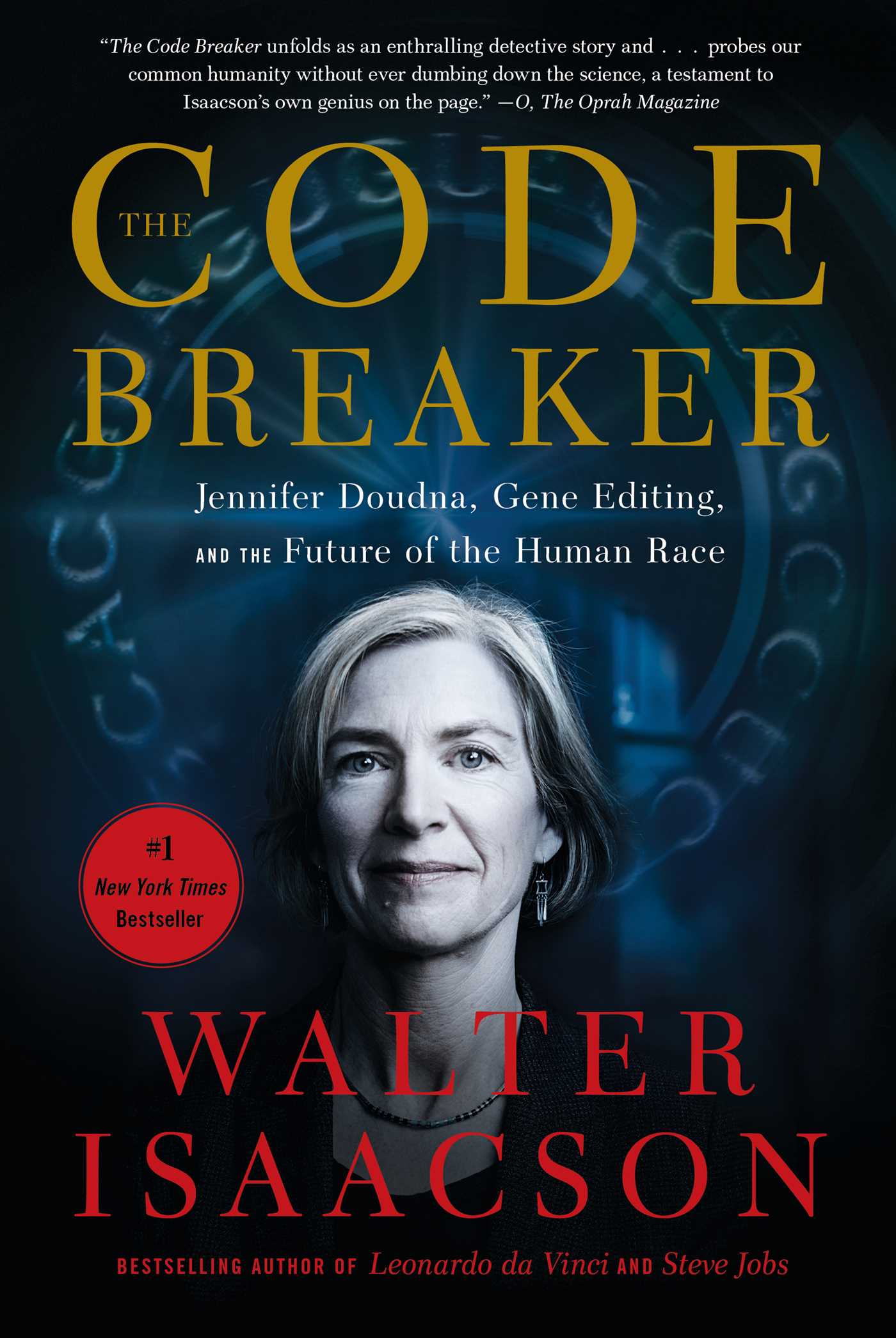 Isaacson (2021)
How will this play out moving forward?
The tech founders who built the famous companies are moving into bio, and they're bringing capital, ambition, and public attention with them. Demis Hassabis co-founded DeepMind at Google, won a Nobel Prize for AlphaFold, and spun out Isomorphic Labs to apply protein structure prediction to drug discovery, now partnered with Novartis and Eli Lilly. Patrick Collison founded the Arc Institute, which is building virtual cells and genome language models. Mark Zuckerberg and Priscilla Chan are funding the broader mission through CZI, which has committed to curing, preventing, or managing all disease by century's end.
On the longevity side, serious money is flowing in from Sam Altman (Retro Biosciences), Jeff Bezos (Altos Labs), Larry Page (Calico), and Brian Armstrong and Blake Byers (NewLimit), alongside Bryan Johnson, who turned his own body into a longevity experiment. Aging sits upstream of basically every major disease category, so addressing it is obviously of huge commercial value. As AI and aging (in my opinion, the two most important verticals of this century) become a larger share of where biotech is going, the industry should start producing the kinds of founder stories that actually get told.
All in all, I think this is one of the more fascinating cultural phenomena in business storytelling. There's a real tradeoff. On one hand, biotech's invisibility probably costs the industry top talent: ambitious people chasing asymmetric outcomes who'd thrive in drug development but never consider it. On the other, that same invisibility likely filters out hype-seeking founders and selects for people who are in it for the science. My guess is that a less founder-obsessed culture leads to better drugs, but the value creation in this industry deserves to be far better advertised than it is. These people built the drugs that keep millions of patients alive. The least we can do is learn their names.